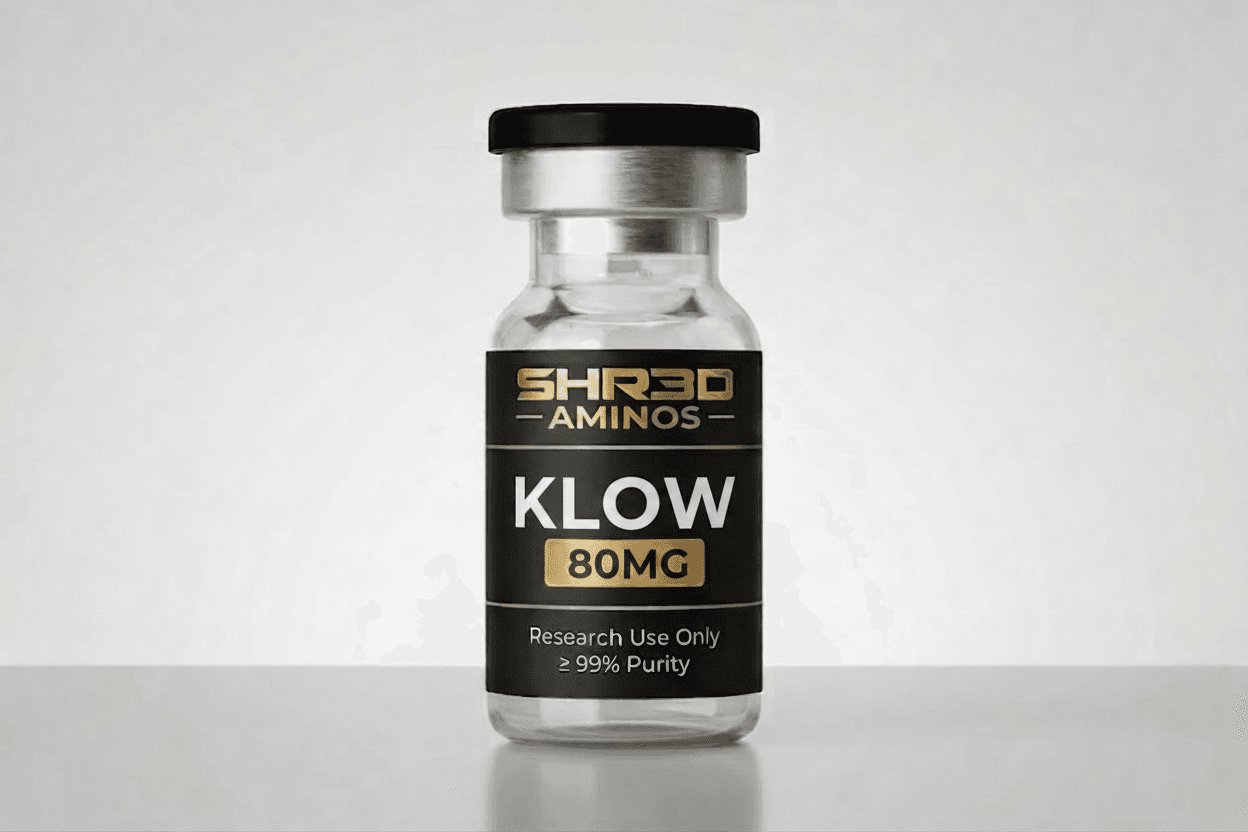
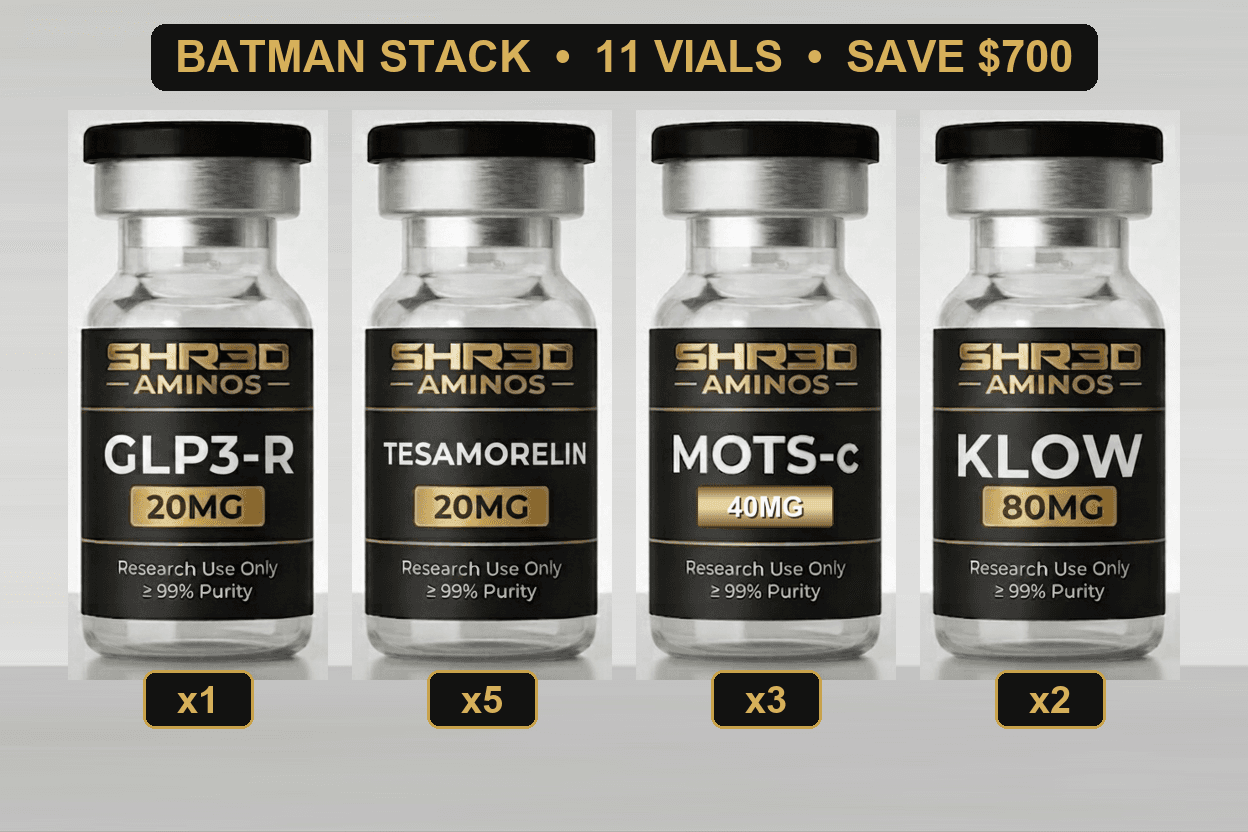
Batman Stack 🦇
IN STOCK. READY TO SHIP FROM USA.
FREE shipping on orders over $200
SECURE CHECKOUT. ENCRYPTED. DISCREET.
Research Use Only
These products are for laboratory research only and not intended for medical use. They are not FDA-approved to diagnose, treat, cure, or prevent any disease. By purchasing, you certify they will be used solely for research and not for human or animal consumption.
Bundle / Blend Research
This product contains Retatrutide + Tesamorelin + MOTS-C. Select a tab below to view the full Gold Standard research profile for each component.
On This Page
Overview
Research Overview
Retatrutide (LY3437943) is a first-in-class incretin-based triple hormone receptor agonist developed by Eli Lilly and Company that simultaneously engages three distinct metabolic receptor pathways. The molecule was first described by Coskun et al. in a 2022 publication in Cell Metabolism, detailing its discovery, mechanism, and early pharmacological characterization in preclinical models.[4]
Structurally, retatrutide is a 39-amino acid synthetic peptide engineered from a GIP peptide backbone. It incorporates three non-coded amino acid residues — two α-aminoisobutyric acid (Aib) residues at positions 2 and 20, and one α-methyl-L-leucine residue at position 13 — to enhance metabolic stability and receptor binding. A C20 fatty diacid moiety is conjugated at lysine-17 via an AEEA-γGlu linker, promoting albumin binding and extending the plasma half-life to approximately 6 days.[4][8]
The foundational pharmacological rationale for retatrutide rests on the hypothesis that simultaneously activating receptors for GLP-1, GIP, and glucagon can produce a distinct metabolic signaling profile compared to mono- or dual-receptor agonists. GLP-1 receptor agonism is associated with insulin-secretion signaling; GIP receptor agonism enhances the insulinotropic response and supports lipid metabolism; and critically, glucagon receptor agonism increases energy expenditure and drives lipolysis and hepatic fatty acid oxidation — a mechanism absent from existing dual agonists like tirzepatide.[1][10][11]
This research profile is limited to receptor pharmacology, in vitro data and preclinical (animal) literature. Human clinical-trial outcomes, doses and administration schedules are outside the scope of this research-use-only page; researchers should consult the cited primary literature directly.
Published preclinical work has examined retatrutide in rodent models of hepatic lipid metabolism, renal function and tumor biology. Marathe et al. (2025) reported reduced tumor engraftment and delayed tumor onset in mouse models compared with semaglutide,[14] and Ma et al. (2025) reported reduced inflammatory and fibrotic processes in the kidneys of diabetic db/db mice.[15]
For laboratory research use only. Not for human or veterinary use.
Mechanism of Action
Mechanism of Action
Retatrutide functions as a simultaneous triple G protein-coupled receptor agonist, activating the GIP receptor, the GLP-1 receptor, and the glucagon receptor from a single peptide molecule. This "Triple G" mechanism refers to GIP, GLP-1 and glucagon receptor co-agonism by a single molecule.[4][10]
Receptor Binding Properties
| Property | GIP Receptor (GIPR) | GLP-1 Receptor (GLP-1R) | Glucagon Receptor (GCGR) |
|---|---|---|---|
| Relative Potency (vs. endogenous ligand) | 8.9× that of native GIP | 0.4× that of native GLP-1 | 0.3× that of native glucagon |
| EC50 (Human, In Vitro) | 0.0643 nM | 0.775 nM | 5.79 nM |
| EC50 (Mouse) | 0.191 nM | 0.794 nM | 2.32 nM |
| Design Profile | Highest potency — primary backbone origin | Attenuated — improves GI tolerability | Attenuated — balanced by insulinotropic effects |
| Evidence | Coskun et al. (2022)[4] | Coskun et al. (2022)[4] | Coskun et al. (2022)[4] |
Downstream Signaling Cascade
| Step | Signaling Event | Molecular Detail |
|---|---|---|
| 1. Receptor Binding | Retatrutide binds to GIPR, GLP-1R, and/or GCGR on target cell membranes | All three are Gs-coupled GPCRs[4] |
| 2. G-Protein Coupling | Conformational change activates Gs proteins | Stimulates adenylate cyclase[4] |
| 3. cAMP Elevation | Adenylate cyclase converts ATP to cyclic AMP (cAMP) | cAMP acts as second messenger[11] |
| 4. PKA Activation | Elevated cAMP activates Protein Kinase A (PKA) and RAPGEF4 (Epac2) | Downstream effector activation[11] |
| 5. Ion Channel Modulation | In β-cells: closure of KATP channels, opening of voltage-gated Ca2+ channels | Ca2+ influx triggers insulin granule exocytosis[11] |
| 6. Gene Expression | Nuclear signaling promotes insulin biosynthesis and β-cell proliferation | Long-term metabolic adaptation[11] |
Tissue-Level Effects by Organ System
| Tissue / Organ | Effect | Primary Receptor(s) | Evidence |
|---|---|---|---|
| Pancreas (β-cells) | Glucose-dependent insulin secretion potentiated | GLP-1R, GIPR | Coskun et al. (2022)[4] |
| Pancreas (α-cells) | Suppressed glucagon secretion during hyperglycemia (net glycemic improvement despite GCGR activation) | GLP-1R (suppressive), GCGR (counterbalanced) | Rosenstock et al. (2023)[2] |
| Liver | Increased mitochondrial fatty acid oxidation; reduced hepatic lipogenesis | GCGR (primary), GLP-1R | Sanyal et al. (2024)[3] |
| Adipose Tissue | Increased energy expenditure; promoted lipolysis in white adipose tissue; improved lipid-buffering capacity | GCGR (lipolysis/EE), GIPR (lipid buffering) | Katsi et al. (2025)[10] |
| Central Nervous System | Hypothalamic GLP-1R/GIPR expression and receptor signaling (preclinical) | GLP-1R, GIPR | Abdul-Rahman et al. (2024)[11] |
| GI Tract | Delayed gastric emptying (attenuates with repeated exposure) | GLP-1R | Urva et al. (2023)[17] |
| Kidney | Potential renoprotective effects: reduced albuminuria, improved renal hemodynamics over time | GLP-1R, indirect (visceral fat reduction) | Heerspink et al. (2025)[7] |
Comparison with Related Compounds
| Feature | Retatrutide (Triple Agonist) | Tirzepatide (Dual Agonist) | Semaglutide (Mono Agonist) |
|---|---|---|---|
| Receptor Targets | GLP-1, GIP, Glucagon | GLP-1, GIP | GLP-1 only |
| Glucagon Activity | Yes — increases energy expenditure & lipid oxidation | No | No |
The addition of glucagon receptor agonism is the critical pharmacological differentiator. While glucagon would normally raise blood glucose via hepatic glycogenolysis, the strong insulinotropic effects of GIP and GLP-1 receptor activation "buffer" this effect, allowing the metabolic effects of glucagon signaling — increased energy expenditure, enhanced lipolysis, and hepatic fat oxidation — to be expressed while glycemic effects are counterbalanced.[4][10]
Research Applications
Research Applications
Retatrutide is used as a research tool in in vitro and preclinical (animal) studies of incretin and glucagon receptor pharmacology. Published laboratory research areas include:
- Triple-Receptor Pharmacology — Characterization of simultaneous GIPR, GLP-1R and GCGR agonism, relative receptor potency (EC50) and downstream cAMP/PKA signaling in cell-based assays.[4]
- Energy Balance in Rodent Models — In diet-induced obese (DIO) mice, Coskun et al. (2022) reported 36.9% body weight reduction (vs. 21.2% for tirzepatide) and 86.8% fat mass reduction, with engagement of all three receptors in vivo.[4]
- Glucose Homeostasis — Preclinical study of glucose-dependent insulin secretion, β-cell signaling and the counterbalancing of glucagon receptor activity by GIP and GLP-1 receptor signaling.[4][11]
- Hepatic Lipid Metabolism — Glucagon receptor–mediated effects on mitochondrial fatty acid oxidation and hepatic lipogenesis in animal models.[4][10]
- Gastric Emptying — Urva et al. (2023) described a dose-dependent delay in gastric emptying in obese mice that attenuated with repeated exposure.[17]
- Renal Research Models — Ma et al. (2025) compared retatrutide, liraglutide and tirzepatide in diabetic db/db mice, reporting reduced ALT, AST and lipid markers and mitigated inflammatory and fibrotic processes in kidney tissue.[15]
- Tumor Biology Models — Marathe et al. (2025) reported reduced tumor engraftment, delayed tumor onset and attenuated tumor growth in pancreatic and lung cancer models in obese mice.[14]
Retatrutide is an investigational compound and is not approved by the FDA or EMA. Human clinical outcomes, doses and administration schedules are not summarized on this page.
For laboratory research use only. Not for human or veterinary use.
Biochemical Characteristics
| Property | Value |
|---|---|
| Molecular Formula | C₂₂₁H₃₄₂N₄₆O₆₈ |
| Molecular Weight | 4731.33 Da |
| CAS Number | 2381089-83-2 |
| PubChem CID | 171390338 |
| Sequence (1-Letter) | Y-Aib-QGTFTSDYSI-αMeL-LDK-K*-AQ-Aib-AFIEYLLEGGPSSGAPPPS-NH₂ (* = Lys modified with AEEA-γGlu-C20 diacid) |
| Sequence (3-Letter) | Tyr-Aib-Gln-Gly-Thr-Phe-Thr-Ser-Asp-Tyr-Ser-Ile-αMeLeu-Leu-Asp-Lys-Lys(AEEA-γGlu-C20 diacid)-Ala-Gln-Aib-Ala-Phe-Ile-Glu-Tyr-Leu-Leu-Glu-Gly-Gly-Pro-Ser-Ser-Gly-Ala-Pro-Pro-Pro-Ser-NH₂ |
| Structure | 39-amino acid linear peptide; GIP backbone; non-coded residues: Aib at positions 2 & 20, α-methyl-L-leucine at position 13; C20 fatty diacid conjugated at Lys-17 via AEEA-γGlu linker; C-terminus amidated |
| Origin | Synthetic peptide engineered from GIP (glucose-dependent insulinotropic polypeptide) backbone; developed by Eli Lilly and Company |
| Classification | Triple Incretin/Hormone Receptor Agonist (GLP-1/GIP/Glucagon) / Acylated Peptide / Investigational Drug |
| Half-Life | Approximately 6 days (published pharmacokinetic data); ~21 hours in mice |
| Bioavailability | Albumin binding via C20 fatty diacid extends duration of action (published pharmacokinetic data) |
Identifiers
| Purity Standard | ≥99% by RP-HPLC (research grade) |
|---|---|
| Synonyms | Retatrutide, LY3437943, LY-3437943, RTT, GGG Tri-Agonist, Triple G, Triple Agonist, Reta Peptide |
| InChI Key | MLOLQJNKXBNWFW-JMUPIODPSA-N |
| Developer | Eli Lilly and Company (Indianapolis, IN, USA) |
Preclinical Research Summary
Preclinical Research Summary
Key Preclinical (Animal) Studies
| Study | Model | Key Findings | Ref |
|---|---|---|---|
| Coskun et al. (2022) Cell Metabolism | DIO C57/Bl6 mice; 10 nmol/kg daily SC | 36.9% body weight loss (vs. 21.2% tirzepatide); 86.8% fat mass reduction; improved blood glucose, insulin, ALT, liver triglycerides; engages all three receptors in vivo | [4] |
| Urva et al. (2023) Diabetes Obes. Metab. | C57/Bl6 obese mice; 10 nmol/kg SC | Dose-dependent gastric emptying delay; chronic treatment attenuated GI slowing (tachyphylaxis); superior weight/food intake reduction vs. semaglutide alone | [17] |
| Ma et al. (2025) Endocrine | Diabetic db/db mice; 10 nmol/kg daily SC, 10 weeks | Superior efficacy over liraglutide and tirzepatide in reducing ALT, AST, cholesterol, triglycerides, LDL; mitigated inflammatory and fibrotic processes in diabetic kidney | [15] |
| Marathe et al. (2025) NPJ Metab. Health Dis. | Pancreatic and lung cancer models in obese mice | Reduced tumor engraftment; delayed tumor onset; greater tumor suppression than semaglutide; durable antitumor effects despite partial weight regain | [14] |
Experimental Concentrations (In Vitro / Animal Models)
| Setting | Dose | Route / Schedule | Notes |
|---|---|---|---|
| In Vitro (EC50) | 0.0643 nM (GIPR), 0.775 nM (GLP-1R), 5.79 nM (GCGR) | Cell culture | Biased toward GIP potency[4] |
| Animal (Mice) | 10 nmol/kg daily | SC injection | Standard efficacy dosing; t1/2 21 h in mice[4] |
Pharmacokinetic Profile
| Parameter | Value | Notes |
|---|---|---|
| Half-life (Human) | ~6 days | Published pharmacokinetic data[8] |
| Half-life (Mouse) | ~21 hours | Single 47 μg/kg dose[4] |
| Metabolism | Hepatic proteolysis; fatty acid β-oxidation | No CYP450 interaction |
| Clearance (Mouse) | 11.22 mL/h/kg | CD-1 mice |
For laboratory research use only. Not for human or veterinary use.
&x26A0;️ Important Disclaimer
This product is sold strictly for in-vitro research and laboratory use only. It is not approved by the FDA for human consumption, medical use, diagnostic use, or veterinary use. Bodily introduction of any kind into humans or animals is strictly forbidden by law. All products are supplied as research chemicals only. The information provided here is compiled from peer-reviewed scientific literature and is intended solely for educational and informational purposes.
About This Research Profile
This research profile was compiled from peer-reviewed sources including publications in the New England Journal of Medicine, The Lancet, Nature Medicine, Cell Metabolism, and other high-impact journals. All citations reference publicly available scientific literature. The profile is regularly reviewed and updated to reflect the latest research findings. Last reviewed: February 2026.
Authors & Attribution
Article Author
Tamer Coskun, MD, PhD
Tamer Coskun, MD, PhD, is a senior researcher at Eli Lilly and Company (Indianapolis, IN, USA) and a key figure in the discovery and early development of retatrutide (LY3437943). He served as the lead author on the foundational 2022 publication in Cell Metabolism detailing the molecule's discovery, mechanism of action, and early pharmacological characterization in preclinical models. Dr. Coskun has been a senior or co-author on subsequent Phase 2 clinical trials, including substudies focusing on body composition, eating behavior, and kidney parameters. His research contributions span the entire translational pipeline of retatrutide, from molecular design through clinical validation. His key publications include "LY3437943, a novel triple glucagon, GIP, and GLP-1 receptor agonist for glycemic control and weight loss: From discovery to clinical proof of concept" (2022, Cell Metabolism) and "Effects of retatrutide on body composition in people with type 2 diabetes" (2025, The Lancet Diabetes & Endocrinology). Tamer Coskun is being referenced as one of the leading scientists involved in retatrutide research. In no way is this doctor/scientist endorsing or advocating the purchase, sale, or use of this product for any reason. There is no affiliation or relationship, implied or otherwise, between SHR3D Aminos and this doctor.
Scientific Journal Author
Ania M. Jastreboff, MD, PhD
Ania M. Jastreboff, MD, PhD, is an Associate Professor at Yale University School of Medicine (New Haven, CT, USA) and Director of the Yale Obesity Research Center. She is the lead author of the 2023 New England Journal of Medicine publication on the triple-hormone-receptor agonist retatrutide (LY3437943) and is widely cited in the incretin and multi-receptor agonist research literature. Her published research focuses on the neuroendocrine regulation of appetite, energy balance and metabolic signaling, and she has contributed to the scientific literature on several investigational incretin-based peptides, including GIP, GLP-1 and glucagon receptor agonists. Ania M. Jastreboff is being referenced as one of the leading scientists involved in retatrutide research. In no way is this doctor/scientist endorsing or advocating the purchase, sale, or use of this product for any reason. There is no affiliation or relationship, implied or otherwise, between SHR3D Aminos and this doctor.
Contributing Researcher
Julio Rosenstock, MD
Julio Rosenstock, MD, is a clinical researcher affiliated with Velocity Clinical Research at Medical City (Dallas, TX, USA) and a widely published expert in incretin-based pharmacology research. He is the lead author of a 2023 publication in The Lancet on retatrutide (LY3437943), a GIP, GLP-1 and glucagon receptor agonist, and has authored hundreds of peer-reviewed publications on incretin and glucagon receptor biology. Julio Rosenstock is being referenced as one of the leading scientists involved in retatrutide research. In no way is this doctor/scientist endorsing or advocating the purchase, sale, or use of this product for any reason. There is no affiliation or relationship, implied or otherwise, between SHR3D Aminos and this doctor.
Referenced Citations
Jastreboff AM, Kaplan LM, Frias JP, Wu Q, Du Y, Gurbuz S, Coskun T, Haupt A, Milicevic Z, Hartman ML. Triple-Hormone-Receptor Agonist Retatrutide for Obesity - A Phase 2 Trial. New England Journal of Medicine, 389(6), 514-526, 2023.
PubMedRosenstock J, Frias J, Jastreboff AM, Du Y, Lou J, Gurbuz S, Thomas MK, Hartman ML, Haupt A, Milicevic Z, Coskun T. Retatrutide, a GIP, GLP-1 and glucagon receptor agonist, for people with type 2 diabetes: a randomised, double-blind, placebo and active-controlled, parallel-group, phase 2 trial conducted in the USA. Lancet, 402(10401), 529-544, 2023.
DOISanyal AJ, Kaplan LM, Frias JP, Brouwers B, Wu Q, Thomas MK, Harris C, Schloot NC, Du Y, Mather KJ, Haupt A, Hartman ML. Triple hormone receptor agonist retatrutide for metabolic dysfunction-associated steatotic liver disease: a randomized phase 2a trial. Nature Medicine, 30(7), 2037-2048, 2024.
DOICoskun T, Urva S, Roell WC, Qu H, Loghin C, Moyers JS, O'Farrell LS, Briere DA, Sloop KW, Thomas MK, Pirro V, Wainscott DB, Willard FS, Abernathy M, Morford L, Du Y, Benson C, Gimeno RE, Haupt A, Milicevic Z. LY3437943, a novel triple glucagon, GIP, and GLP-1 receptor agonist for glycemic control and weight loss: From discovery to clinical proof of concept. Cell Metabolism, 34(9), 1234-1247.e9, 2022.
DOIGiblin K, Kaplan LM, Somers VK, Le Roux CW, Hunter DJ, Wu Q, Lalonde A, Ahmad N, Bethel MA. Retatrutide for the treatment of obesity, obstructive sleep apnea and knee osteoarthritis: Rationale and design of the TRIUMPH registrational clinical trials. Diabetes, Obesity and Metabolism, 28(1), 83-93, 2026.
DOICoskun T, Wu Q, Schloot NC, Haupt A, Milicevic Z, Khouli C, Harris C. Effects of retatrutide on body composition in people with type 2 diabetes: a substudy of a phase 2, double-blind, parallel-group, placebo-controlled, randomised trial. The Lancet Diabetes & Endocrinology, 13(8), 674-684, 2025.
DOIHeerspink HJL, Lu Z, Du Y, Duffin KL, Coskun T, Haupt A, Hartman ML. The Effect of Retatrutide on Kidney Parameters in Participants With Type 2 Diabetes Mellitus and/or Obesity. Kidney International Reports, 10(6), 1980-1992, 2025.
DOIUrva S, Coskun T, Loh MT, Du Y, Thomas MK, Gurbuz S, Haupt A, Benson CT, Hernandez-Illas M, D'Alessio DA, Milicevic Z. LY3437943, a novel triple GIP, GLP-1, and glucagon receptor agonist in people with type 2 diabetes: a phase 1b, multicentre, double-blind, placebo-controlled, randomised, multiple-ascending dose trial. Lancet, 400(10366), 1869-1881, 2022.
DOIHeerspink HJL, van Raalte DH, Bjornstad P, Bunck MC, Wu P, Tunali I, Milicevic Z, Koeneman L. Rationale, design and baseline characteristics of the TRANSCEND-CKD trial of retatrutide in patients with chronic kidney disease. Nephrology Dialysis Transplantation, gfaf230, 2025.
DOIKatsi V, Koutsopoulos G, Fragoulis C, Dimitriadis K, Tsioufis K. Retatrutide - A Game Changer in Obesity Pharmacotherapy. Biomolecules, 15(6), 796, 2025.
DOIAbdul-Rahman T, Roy P, Ahmed FK, Mueller-Gomez JL, Sarkar S, Garg N, Femi-Lawal VO, Wireko AA, Thaalibi HI, Hashmi MU, Dzebu AS, Banimusa SB, Sood A. The power of three: Retatrutide's role in modern obesity and diabetes therapy. European Journal of Pharmacology, 985, 177095, 2024.
DOIMaharshi V, Singh S, Manjhi PK, Singh SK, Kumar A, Kumar R. Navigating retatrutide safety: comprehensive insights from systematic review and meta-analysis. Journal of Public Health and Development, 24(1), 318-338, 2026.
DOIAbouelmagd AA, Abdelrehim AM, Bashir MN, Abdelsalam F, Marey A, Tanas Y, Abuklish DM, Belal MM. Efficacy and safety of retatrutide, a novel GLP-1, GIP, and glucagon receptor agonist for obesity treatment: a systematic review and meta-analysis of randomized controlled trials. Proceedings (Baylor University Medical Center), 38(3), 291-303, 2025.
DOIMarathe SJ, Grey EW, Bohm MS, Joseph SC, Ramesh AV, Cottam MA, et al. Incretin triple agonist retatrutide (LY3437943) alleviates obesity-associated cancer progression. NPJ Metabolic Health and Disease, 3(1), 10, 2025.
DOIMa J, Hu X, Zhang W, Tao M, Wang M, Lu W. Comparison of the effects of Liraglutide, Tirzepatide, and Retatrutide on diabetic kidney disease in db/db mice. Endocrine, 87(1), 159-169, 2025.
DOITewari J, Qidwai KA, Tewari A, Kaur S, Tewari V, Maheshwari A. Efficacy and safety of triple hormone receptor agonist retatrutide for the management of obesity: a systematic review and meta-analysis. Expert Review of Clinical Pharmacology, 18(1-2), 51-66, 2025.
DOIUrva S, O'Farrell L, Du Y, Loh MT, Hemmingway A, Qu H, Alsina-Fernandez J, Haupt A, Milicevic Z, Coskun T. The novel GIP, GLP-1 and glucagon receptor agonist retatrutide delays gastric emptying. Diabetes, Obesity and Metabolism, 25(11), 2784-2788, 2023.
DOIStorage & Handling
Summary
Lyophilized: -20°C to -80°C (stable 1–2 years); Reconstituted: aliquot and store at -20°C; avoid repeated freeze-thaw cycles; protect from moisture and light.
Lyophilized Powder
Store at -80°C for optimal long-term stability (approximately 2 years) or at -20°C for up to 1 year. Keep in sealed containers, protected from moisture and light, ideally under nitrogen atmosphere. The lyophilized form appears as a white to off-white solid powder.
Reconstituted Solution
Dissolve in sterile water (soluble at 20 mg/mL with pH adjustment) or DMSO. Prepare working aliquots immediately upon reconstitution to prevent repeated freeze-thaw cycles, which can inactivate the peptide. Store aliquots at -20°C and use within 1 month for best results.
Quality Control
Purity is assessed by RP-HPLC (targeting ≥99% for research grade). Molecular identity is confirmed by Mass Spectrometry (expected MW ~4731.33 Da). Additional characterization may include NMR spectroscopy (H-NMR) for structural verification. The C20 fatty diacid conjugation at Lys-17 enhances metabolic stability in biological systems.
RUO Disclaimer
Research Use Only
For Research Use Only (RUO). This product is intended solely for in-vitro laboratory research. It is not a drug, food, cosmetic, or medical device and is not intended for use in the diagnosis, cure, mitigation, treatment, or prevention of any disease or medical condition. This product has not been approved by the FDA for any clinical or therapeutic use. Researchers must comply with all applicable regulations regarding the purchase and use of research chemicals.
Certificate of Analysis
Every batch is strictly tested by accredited third-party laboratories (ISO 17025) to ensure 99%+ purity.
Latest Lab Report
Certificate pending
This batch’s certificate of analysis is not yet on file. It is published here as soon as the lab report lands.
Related Research Compounds
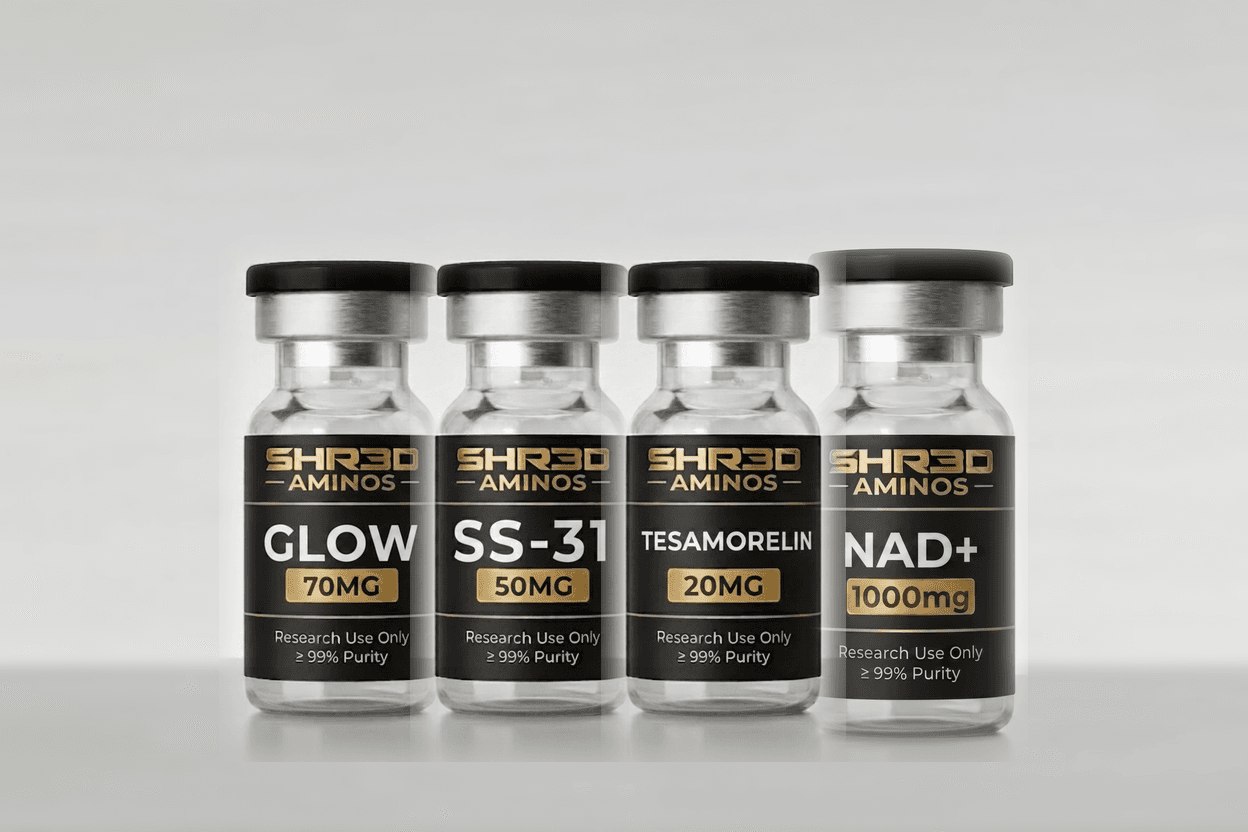
Ultimate GLOW UP Stack
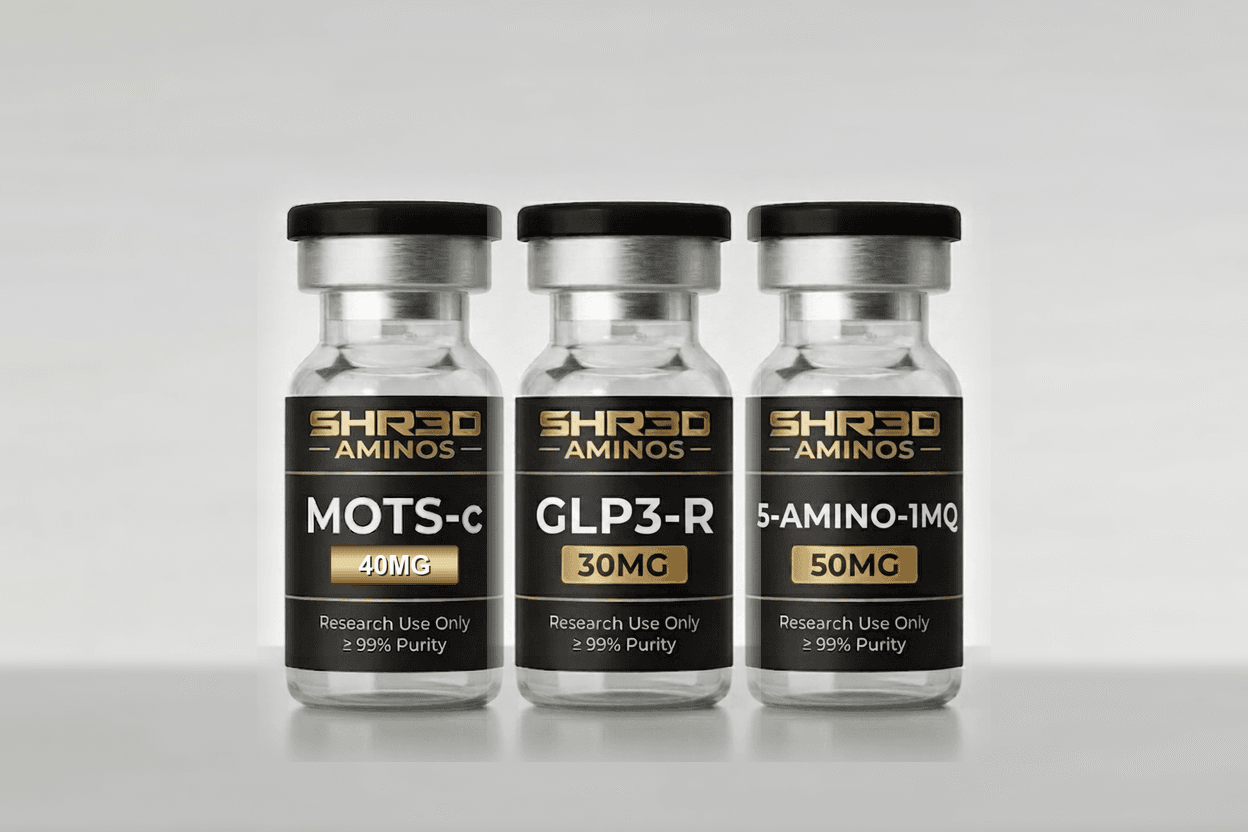
Ultimate Research Stack
Next Level Wolverine Stack 🐺